
In my last post, I shared a general update on life around the farm—but this one felt worthy of its own space.
Because this year’s garden?
It deserves its own conversation.
The Strategy (If You Can Call It That)
This year’s garden plan is both very deliberate… and maybe just a little unhinged.
Let me explain.
I’m taking a very measured approach this season.
Meaning—I’m throwing everything at the dirt and seeing what sticks.
Or, as the youngsters say, “I’m sending it.”
(And yes… I cringed a little typing that.)
The Planning of the Garden – Just as Important as Planting the Garden
At this point, I may have slightly overcommitted—but we’re rolling with it.
This spring we’re growing: Tomatoes (6 varieties), onions (4 varieties), potatoes, sweet potatoes, carrots, celery, tomatillos, bell peppers, jalapeños, lettuce, spinach, corn, calendula, nasturtium, chamomile, basil, dill, cilantro, butternut squash, zucchini, summer squash, radishes, cucumbers, pumpkins, watermelon, green beans (bush & vine), thyme, oregano, rosemary, blueberries, strawberries, cantaloupe, borage, zinnias, cosmos, and fruit trees—apple, cherry, peach, and plum.
Like I said—no holding back this spring.
Everything goes. Except beets — we don’t like beets.
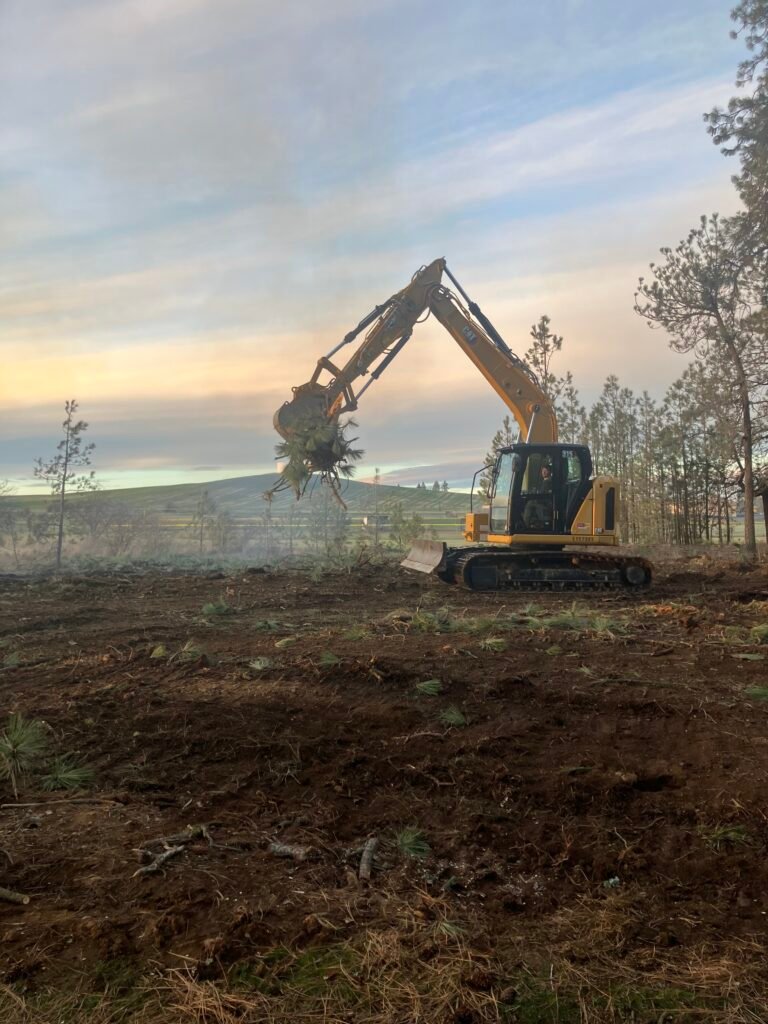
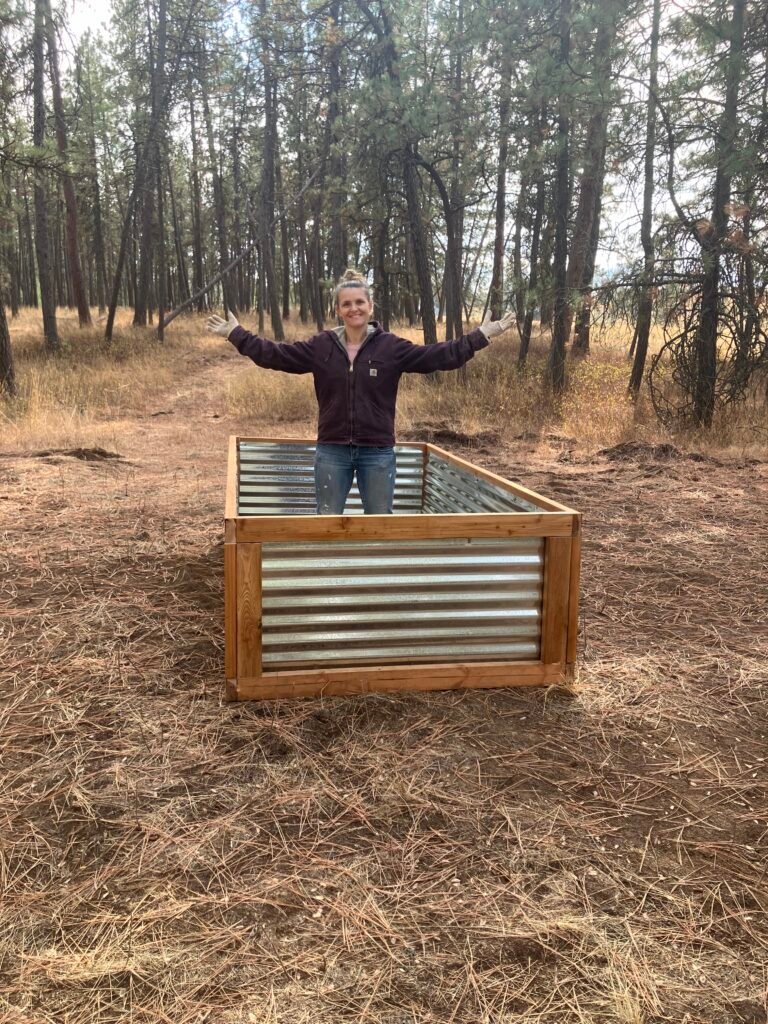
We’ve broken ground on the property for the shop, the garden and the orchard. I’m kicking myself for not getting more imagery! I’ll be better about that. On the right is a picture of 1/10 raised beds I built. Check out the blog post for inspiration!
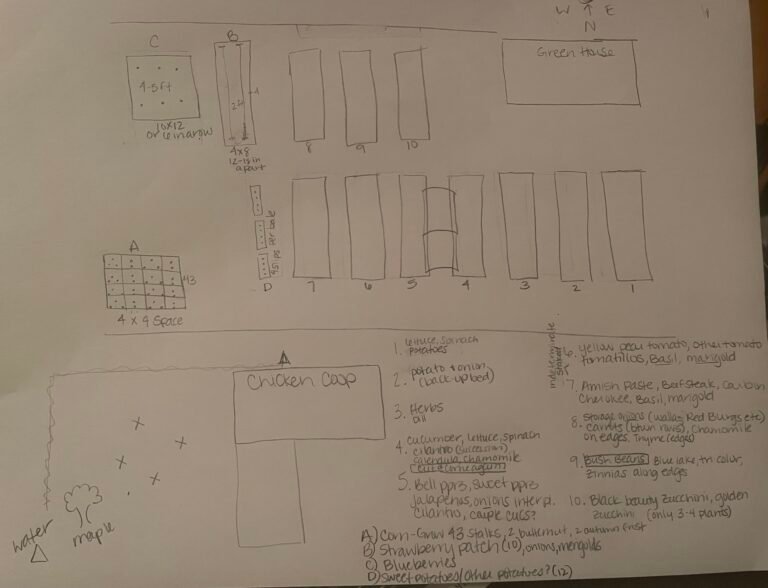
But First… A Plan
Because as much as I’d love to pretend this is all spontaneous—there is a plan behind the chaos.
And I’ve learned (the hard way) that gardening without a plan usually means wasting time, seeds, and a whole lot of effort.
Planning for the 2026 garden actually started back in the fall of 2025. Luke and I walked the property, picked the garden and orchard locations, cleared brush and fallen trees, and loosely mapped everything out.
By January, I sat down and made a list of fruits and vegetables our family actually eats—because truly, there’s no reason for me to be growing beets if no one in this house will touch them.
From there, I researched planting timelines based on our zone—when to start seeds, when to transplant, and what made more sense to buy from a nursery.
And just a quick side note:
Yes, growing everything from seed is a great skill. But supporting your local nursery? That matters too.
We don’t have to do everything alone.
The Calm Before the Storm
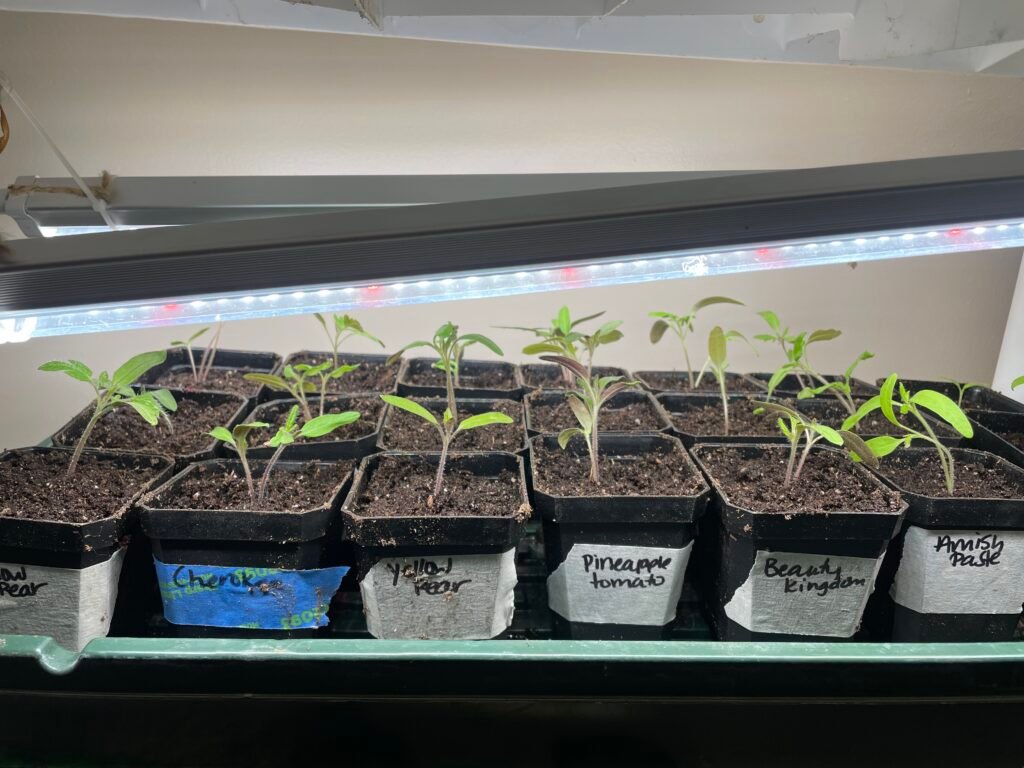
To keep things somewhat organized, I grouped seeds by planting date and labeled them with sticky notes.
For example: jalapeños, cilantro, and calendula all got started on March 20.
Right now, I’ve got Walla Walla, red burgundy, and white sweet Spanish onions going strong, along with herbs and eight varieties of tomatoes—all happily living their best lives under grow lights.
I also attempted to propagate sweet potatoes using both the soil and water methods.
It’s been about four weeks… and still no slips.
So that’s humbling.
I went ahead and ordered twelve slips yesterday—just in case my confidence was a little misplaced.
Expanding the Farm
We also picked up four varieties of seed potatoes (still undecided on whether I’ll cut them—it feels like a commitment).
And in the fall, I ordered fruit trees that just arrived this week. So currently, I have apple, cherry, peach, and plum trees… sitting patiently in my garage… waiting for me to get my life together and plant them.
The orchard space still needs a bit of work, so that’s on deck for this weekend.
We’re also expecting six blueberry plants, ten strawberry plants, and flowers soon.
It really does feel like the calm before the storm—the kind where you know everything is about to take off all at once.
Pollinators & Pests
My goal this year is simple: Give pollinators every possible reason to stick around.
We even have a local beekeeper coming out to scout the property this weekend to see if it’s a good fit for hives—which feels very exciting.
(Feeling Nerdy here! Please tell me I’m not the only one hearing the Magic School Bus theme song right now.)
That said… we’re already seeing some very large yellow jackets, so we may need to address that situation sooner rather than later.
Balance.
Always balance.
The Big Question of Water
The one thing I haven’t quite figured out yet?
How we’re going to water all of this.
We have access to water, and the hose technically reaches—but if I’m hand-watering this entire space, I will be out there all day.
So, the plan is a hardware store run this weekend to look into irrigation options.
Best case: we tie into our existing sprinkler system and automate things.
Worst case: we get creative with some IBC totes and figure it out as we go.
Because Why Not Add More?
And as if the garden and orchard weren’t enough… We’re expecting 30 meat chicks in May.
We’ll raise them for 8–10 weeks, then process and store them for our freezer. I have a friend walking me through the butchering process soon—which I’m both grateful for and slightly nervous about.
Between now and then, we also need to build a chicken tractor.
So yes—spring showed up, and suddenly every hour of daylight has a job assigned to it.
Goals for This Season
I’d be remiss if I didn’t set a few goals. Not expectations—just goals.
If we accomplish even a handful of these, I’ll call it a win:
- Install irrigation for the garden
- Build fencing for the garden and orchard
- Keep the fruit trees alive (production can come later)
- Grow ~100 lbs of tomatoes (and preserve enough for 6 months)
- Successfully grow and can pepperoncini (Luke and Wyatt’s favorite)
- Harvest ~100 lbs of potatoes and onions
- Add a cut flower section
- Minimize grocery store produce as much as possible
- Raise and process ~25 chickens for our freezer
PHEW! That Was A Lot
If I’m being honest, this season already feels a little big.
A little ambitious. A little more than I probably should have taken on.
But it also feels exciting.
Like we’re stepping into something we’ve been slowly building toward.
So we’ll plant, we’ll learn, we’ll adjust—and trust that God will meet us somewhere in the middle of our effort and our inexperience.
Here’s to a full garden, a lot of lessons, and seeing what grows.
Your handwriting and drawing for your garden layout is BEAUTIFUL!