
Double Chocolate Espresso Sourdough Bread
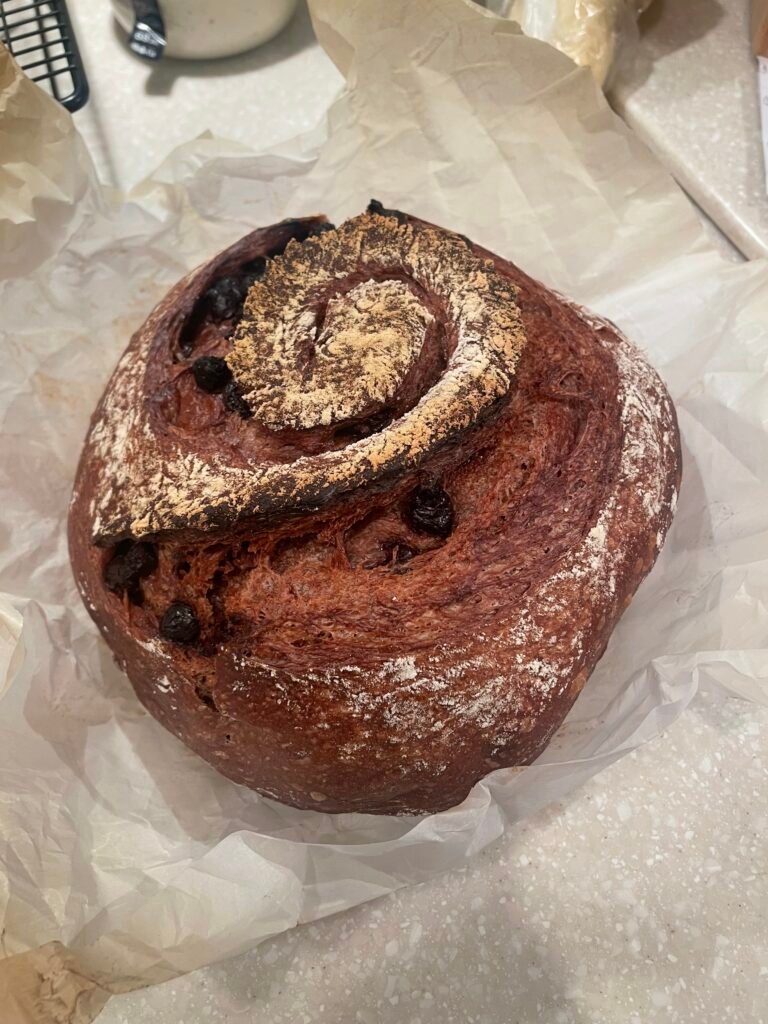
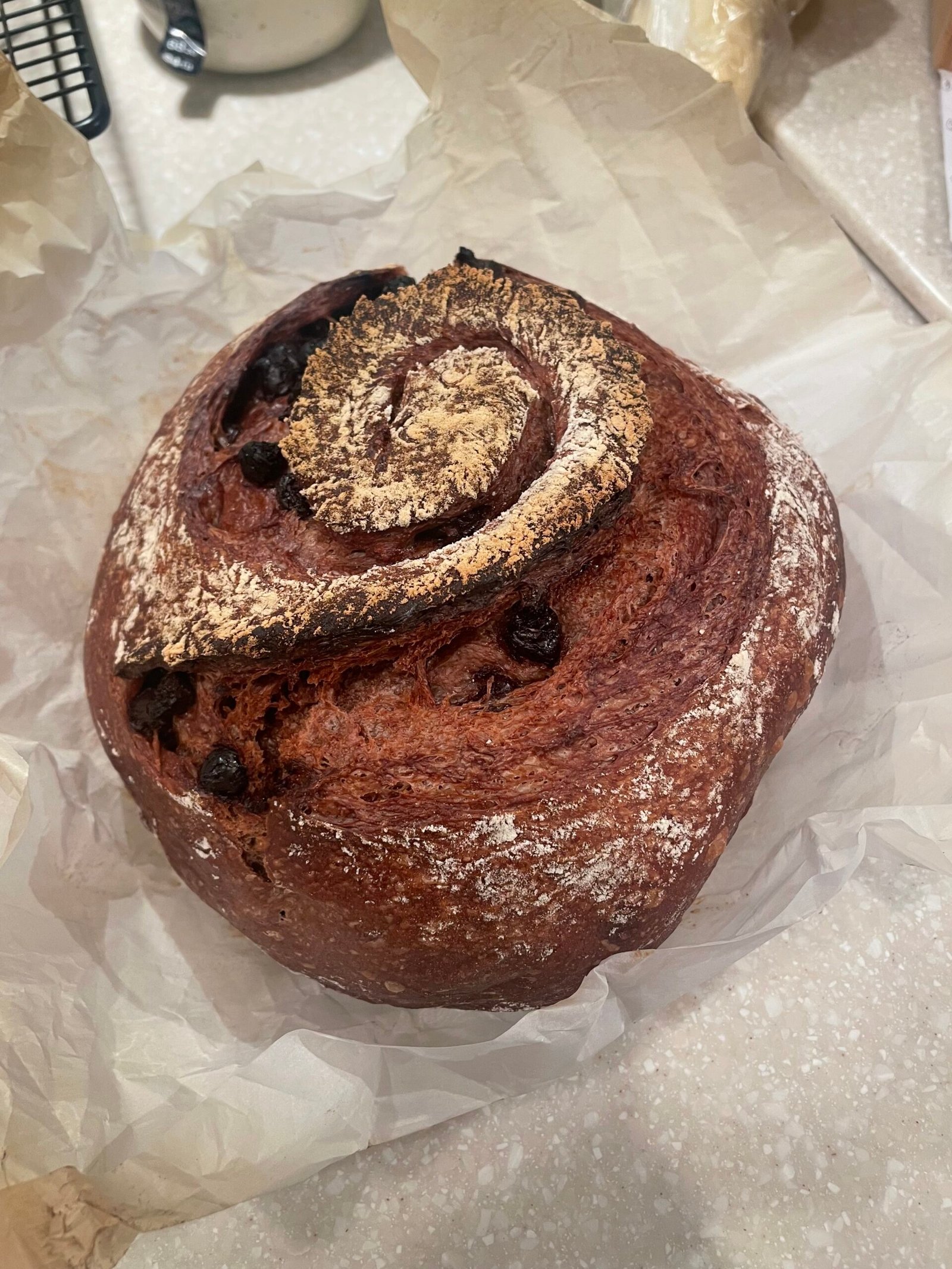
This Double Chocolate Espresso Sourdough Bread is rich, balanced, and intentionally not too sweet. Made with cocoa powder and strong coffee, it delivers deep chocolate flavor while allowing the sourdough’s natural tang to shine. Perfect for holidays, gatherings, or everyday enjoyment, this loaf challenges the idea that chocolate doesn’t belong in bread — and proves that some of the best recipes are the ones that surprise us.
Ingredients
Method
Make the Espresso
- In a small bowl, mix boiling water with instant espresso. If you don't have espresso powder, instant coffee powder can be used as a substitute. Mix with a spoon and set to the side.
- You can substitute the espresso with 50g (4 tbsp) brewed coffee.
Make the Dough
- In a large mixing bowl, add active starter, warm water, espresso shot, and brown sugar. Mix the ingredients until it looks like a milky liquid.
- In a medium bowl, sift together the bread flour, cocoa powder, ground cinnamon and salt.
- Cocoa powder is notorious for clumping, so do not skip this step! Whisking these together first helps you to get a constant brown color in your loaf, instead of streaks.
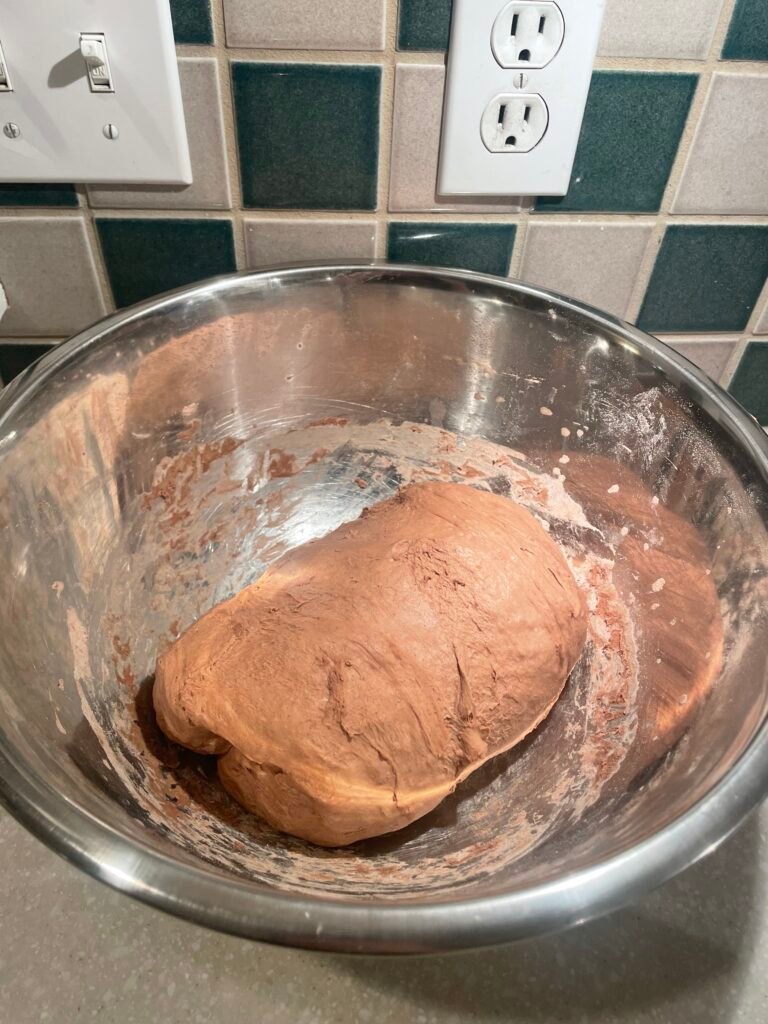
- Add the dry ingredients to the liquid sourdough mixture. Be sure to mix until all the flour is incorporated.
- The dough will be stickier than the typical loaf. This will decrease as you build the gluten and stretch and folds.
- Cover the bowl with plastic wrap and let the dough rest for at least 30 minutes before you move on to the next step
Stretch and Folds
- Scrap the dough away from the bowl. This is easier to do if your hands are slightly wet.
- Grab a section of the. dough and stretch the bread dough above the bowl, and then fold it over on top of itself.
- Rotate the bowl clockwise a quarter of the way and repeat identical stretch and folds until you come full circle. You will notice the dough will start to look smoother than before.
- Cover and let rest for 30 minutes.
Mix-Ins
- Before starting your second round of stretch and folds, gather the chocolate chunks.
- Sprinkle chocolate chips over the top of the dough and repeat the same stretch and folds as before.
- They will continue to be mixed in during your next round of stretch and folds.
- At this point, you'll notice the dough isn't as stretchy as a traditional loaf. This dough will be more stiff. This is due to the cocoa powder. Avoid tearing the dough during the stretch and folds.
- Cover and rest for 30 minutes
- Repeat for a total of 4 rounds, waiting 30 minutes between.
- Cover the dough with a damp towel after each stretch and fold and leave in a warm place to rest.
Bulk Fermentation
- Once all 4 stretch and folds have been completed, cover the dough and allow to bulk ferment on a countertop space.
- This part is known to be the most finicky part of sourdough. There isn't a set time for your bulk ferment. It is greatly dependent on your home's temperature. The warmer the home, the faster the dough will ferment. The opposite is also true.
- From the moment your dough is mixed until the time you shape the loaf, the bulk fermentation can take 10-14 hours in 70℉ home. Be vigilant observing your loaf for signs that it's done fermenting. The clock isn't always the best. Warmer temps make for faster bulk fermentation. Cooler is slower fermentation.
Signs Bulk Fermentation is Done
- Dough has increased in size by 50-60%
- Dough looks light and jiggles when shaken
- Dough should easily pull away from the bowl
- There should be visible bubbles in the dough
- The dough passes the windowpane test
- Coffee inhibits yeast, while cinnamon has antimicrobial properties, so both can slow down the fermentation in a loaf. This means the fermentation may be longer than traditional sourdough. The coffee will also result in crumbier loaf.
Pre-Shape
- With slightly wet fingers, gently release the dough from the sides of the bowl. Avoid popping bubbles - you want them!
- Shape the dough by doing another round of stretch and folds until you have gone full circle.
- Turn the dough upside down, so the seam is on the counter. Let it rest for 30 minutes.
Prep Banneton
- While the dough rests, prepare proofing basket. Either a mixing bowl dusted with flour, or a flour-dusted banneton to prevent sticking.
Final Shaping
- Flip the dough.
- Gently pull the bottom of the dough toward you, then fold it towards the center of the dough. Pull the right side of the. dough out and fold toward the center. Repeat on the left side. Finally, stretch the top of the dough away from you and fold toward the center of the dough.
- Flip the dough over again, seam side down. Gently cup your hands around the dough ball. Turn the ball about a quarter turn and then softly pull the dough toward you. Repeat until you see the dough form a tighter and more round shape. Stop if the dough starts to tear.
- Scope the dough and lay it upside down (smooth side down) into your floured proofing basket and cover with plastic wrap.
Cold Proof
- Place your proofing basket in the fridge for a cold proof for ~8-72 hrs.
- Placing your dough in the fridge slows down the fermentation process, which deepens the flavors of your loaf. There's also some flexibility on when you can bake - on your own schedule. However, if you leave it in the fridge too long, your dough may over-ferment, causing the dough to not rise.
Pre-heat ove 450℉ and place dutch oven in to warm.
Score
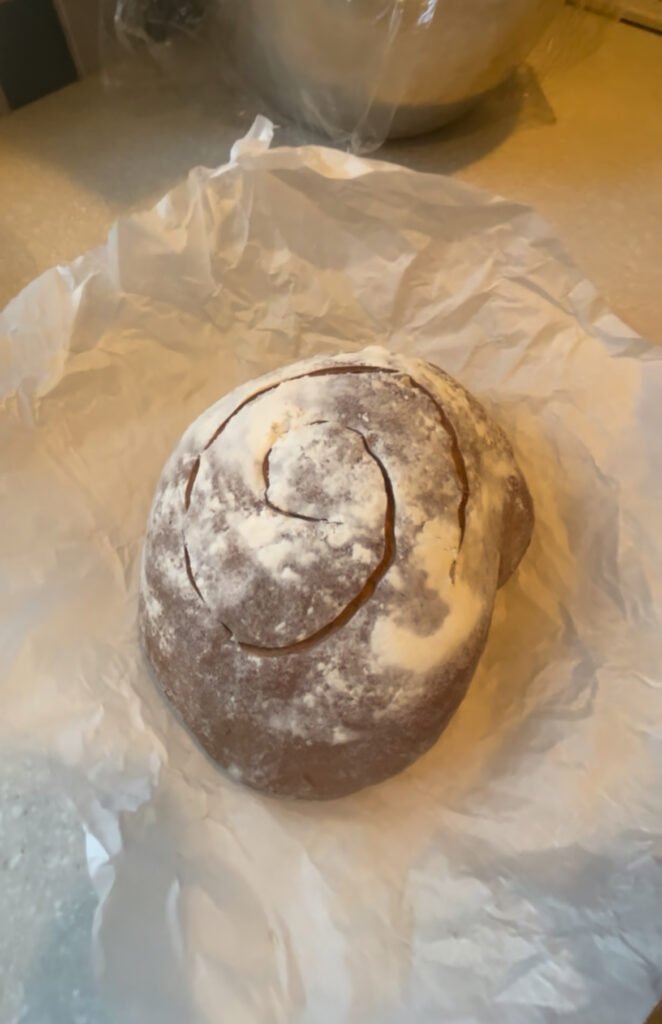
- Remove sourdough from the fridge and freeze for 30 minutes. This will help you with your scoring design. Then, dust with some flour.
- Place parchment paper on counter and flip the banneton upside down over the parchment paper. Since you dusted with flour, the dough should slowly release and fall onto the paper.
- Using a sharp knife or razor, score your bread. For this one I did a cute swirly thing.
Bake
- Place bread (on parchment paper) inside hot dutch oven and 2 ice cubes and bake covered for 30 mins. Continue to bake for an additional 10-15 mins uncovered, depending on how crispy you want your bread.
- Remove at 45-50 minutes (if it's browned up enough). Remove from dutch oven and allow to cool for up to an hour before you cut into it.
Notes
Sugars
I replaced brown sugar with honey and no one noticed the sweetness shift. This dough isn't all that sweet anyway so it was perfect. There are health benefits to honey and cinnamon so I love incorporating these in with this bread. Forgiveness Sourdough is very forgiving. If you find that you don't have 30 minutes to spare between each stretch and fold, go for as long as you can. In a pinch, I've done 15 minutes between each stretch and fold. If your work environment is warm, I think it's fine because the dough rests faster. Baking Though this recipe is written for a HOT dutch oven, you can modify and place in a cold dutch oven. Just preheat your oven to 450 degrees F and bake for 50 minutes total, this includes the preheat oven time. If you're worried about burning your bread, you can place a cookie sheet under your dutch oven. Fermentation This long-fermentation will give you all the gut-healthy benefits of sourdough. The sourdough starter helps to break down the phytic acid naturally found in flour, making the bread easier for your body to digest.
I replaced brown sugar with honey and no one noticed the sweetness shift. This dough isn't all that sweet anyway so it was perfect. There are health benefits to honey and cinnamon so I love incorporating these in with this bread. Forgiveness Sourdough is very forgiving. If you find that you don't have 30 minutes to spare between each stretch and fold, go for as long as you can. In a pinch, I've done 15 minutes between each stretch and fold. If your work environment is warm, I think it's fine because the dough rests faster. Baking Though this recipe is written for a HOT dutch oven, you can modify and place in a cold dutch oven. Just preheat your oven to 450 degrees F and bake for 50 minutes total, this includes the preheat oven time. If you're worried about burning your bread, you can place a cookie sheet under your dutch oven. Fermentation This long-fermentation will give you all the gut-healthy benefits of sourdough. The sourdough starter helps to break down the phytic acid naturally found in flour, making the bread easier for your body to digest.